

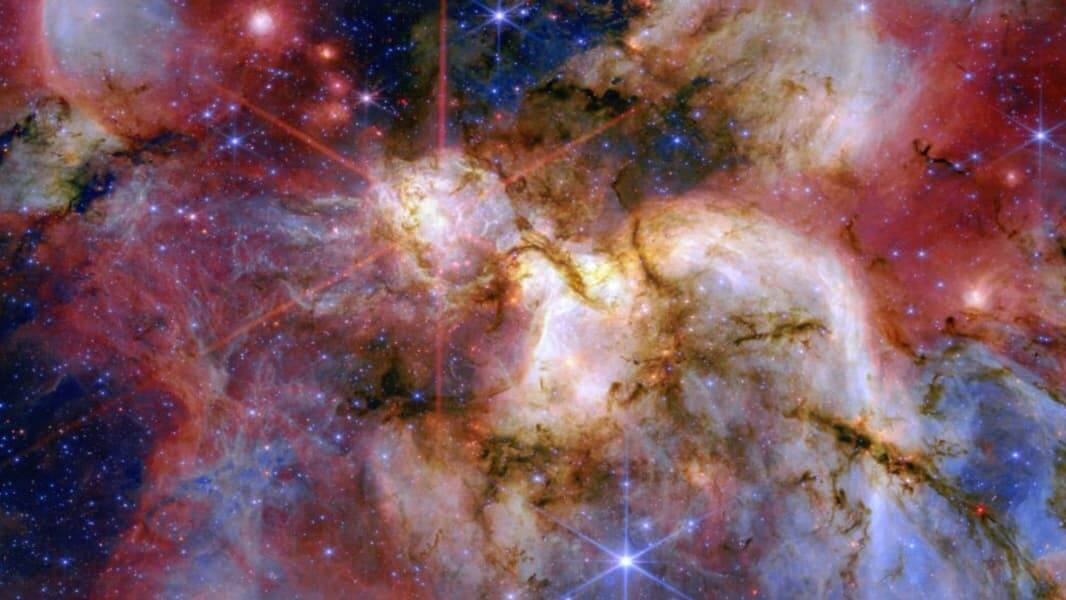
NASA’s James Webb Space Telescope has peered into W51, a star-forming region packed with dust and gas, and turned up young stars that were effectively invisible before. The Webb W51 discovery is not just prettier cosmic wallpaper: Webb’s infrared vision is exposing the earliest stages of massive-star formation, the part astronomers understand far less well than the birth of smaller stars.
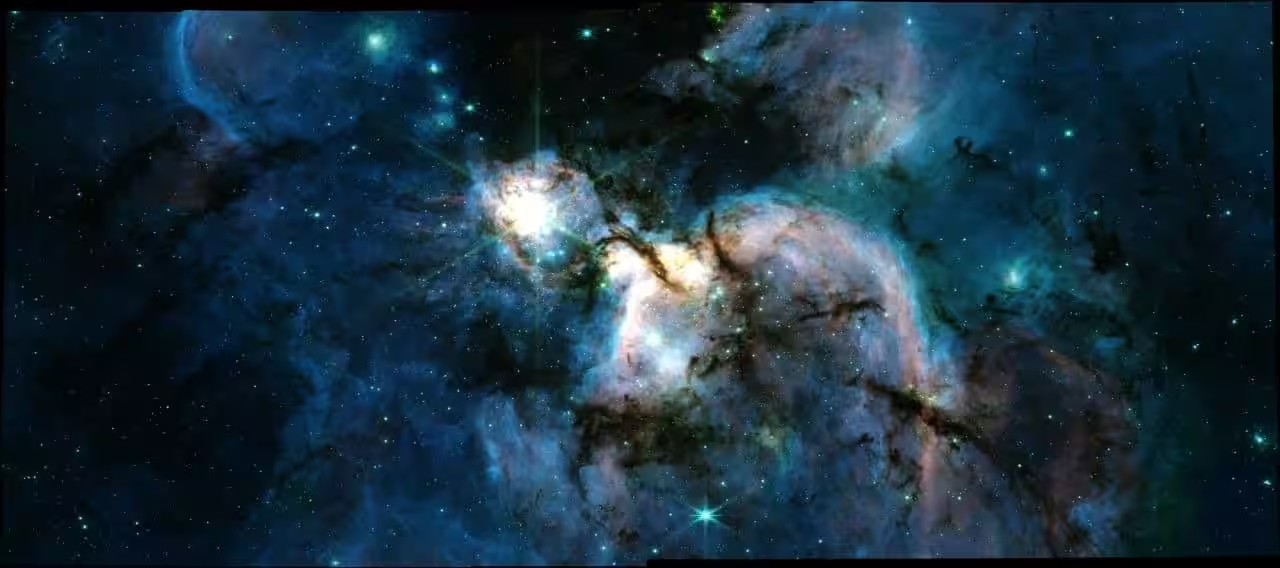
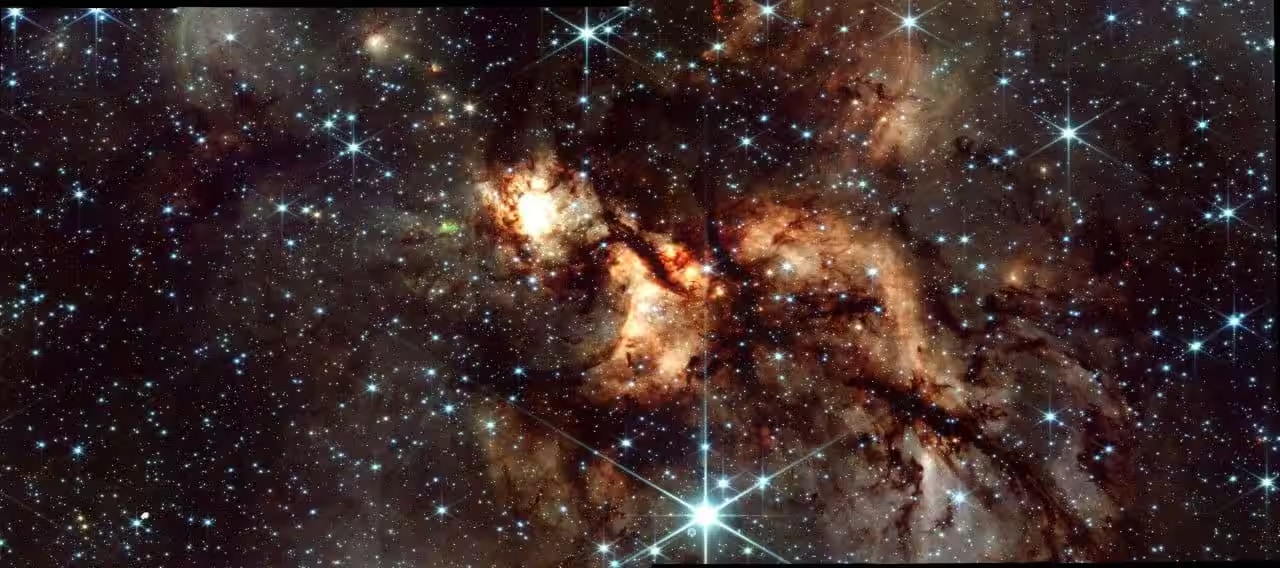
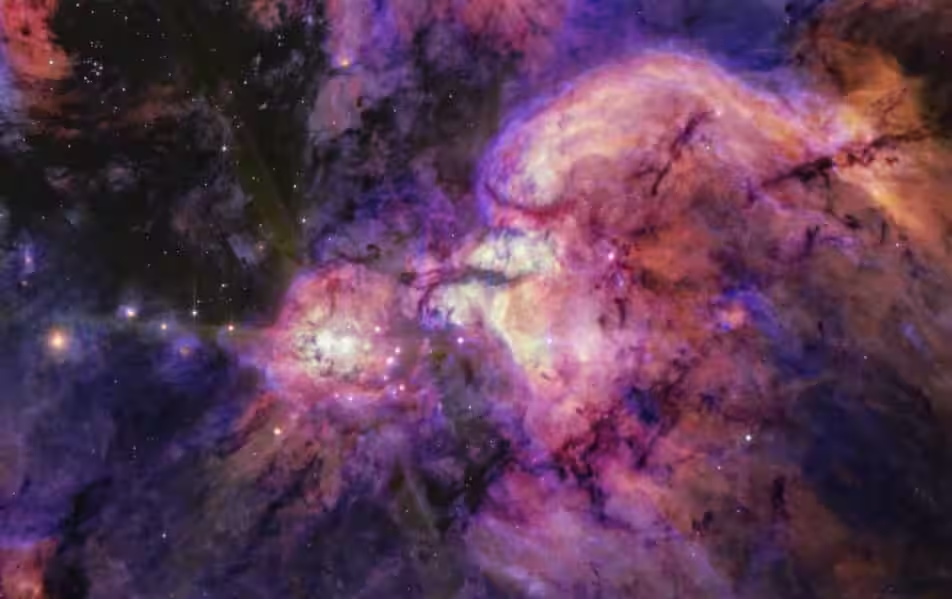
The new images show gas and dust in W51 with far more detail than earlier observations, including shock waves from young stars, huge bubbles of gas, and dark filaments of dust. Astronomers say the stars in the region began forming less than a million years ago, which is barely a blink next to the Sun’s age of about 4.6 billion years.
Why Webb can see W51 more clearly than older telescopes
Earlier telescopes had already looked at W51, but visible light and even some ground-based infrared observations could not punch through the dense cloud cover. Webb’s infrared instruments can, which is why astronomers are suddenly seeing a crowded nursery instead of a blank patch of dust. That is a familiar Webb pattern: it keeps finding structure where older observatories saw only a murky edge.
”With optical and ground-based infrared telescopes we could not see through the dust and find the young stars. Now we can.”
Adam Ginsburg, University of Florida
What W51 can tell astronomers about massive stars
That matters because massive stars are still the awkward part of star-formation theory. Smaller stars have been studied for much longer and in more detail, but the heavyweights shape galaxies, explode sooner, and stir up their surroundings much more aggressively. W51 gives researchers a better look at how those stars assemble inside thick molecular clouds before they light up the neighborhood.
The images are also a reminder of why Webb keeps paying for itself scientifically: every new look at a well-known target can turn into a new result. In W51’s case, the telescope has not just sharpened an old picture; it has effectively rewritten it.
What happens next in W51
Expect astronomers to keep mining these data for more hidden stars and finer-grained clues about how shocks, bubbles, and dust lanes shape stellar birth. The bigger question is whether Webb will start to turn other famous star-forming regions from familiar postcard views into much busier, and much more useful, nurseries.