

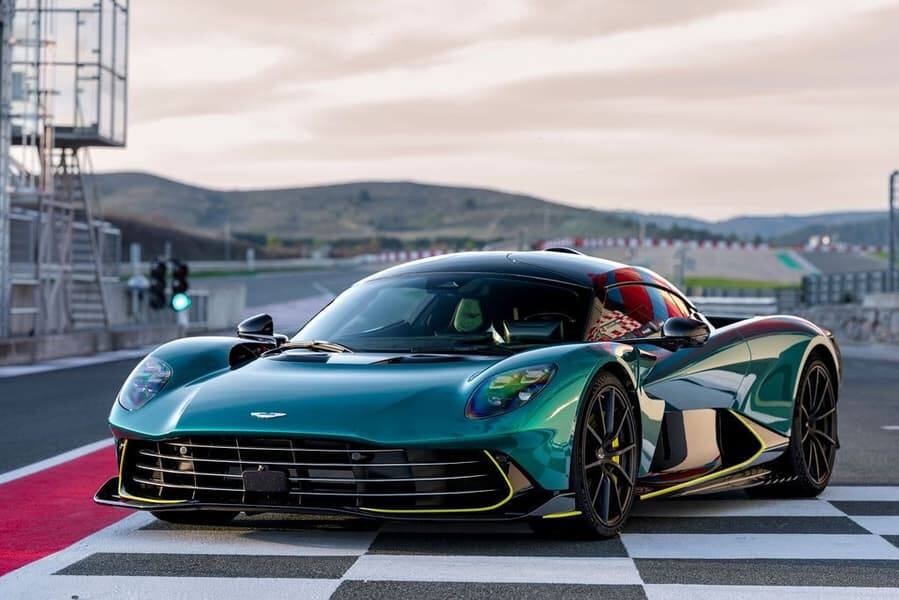
Aston Martin has turned its long-teased Valhalla into a very expensive act of self-help. The plug-in hybrid supercar costs $1 million, makes 1064 hp, and arrives after seven years of development and four CEOs – a nice reminder that British exotica can be as much about corporate survival as horsepower.
The company needs the boost. Aston Martin is still dealing with financial pressure, including losses of $650 million in 2025, so Valhalla is doing double duty: halo car for the showroom, margin machine for the accounts. More than half of the 999 planned cars are already spoken for, and the brand says personalization lifts revenue by 20% above the base price. That is the sort of math automakers suddenly love when the spreadsheets stop being friendly.
Aston Martin Valhalla specs and performance
Under the skin, Valhalla uses a 4.0-liter twin-turbo V8 paired with three electric motors. The result is 1100 Nm of torque, a 0 to 100 km/h time of 2.5 seconds, and a top speed of 350 km/h. Those are proper headline numbers, even in a segment where everyone claims their car is basically a missile with license plates.
- Power: 1064 hp
- Torque: 1100 Nm
- 0-100 km/h: 2.5 seconds
- Top speed: 350 km/h
Aston Martin also gave the car a pure-electric mode, though only for 9 miles, or about 14.5 km, from a 6.1 kWh battery. That is enough for a short, quiet escape from your driveway – not enough to pretend this is a commuter car, especially since there is no luggage space at all.
Track-first design, road-car theater
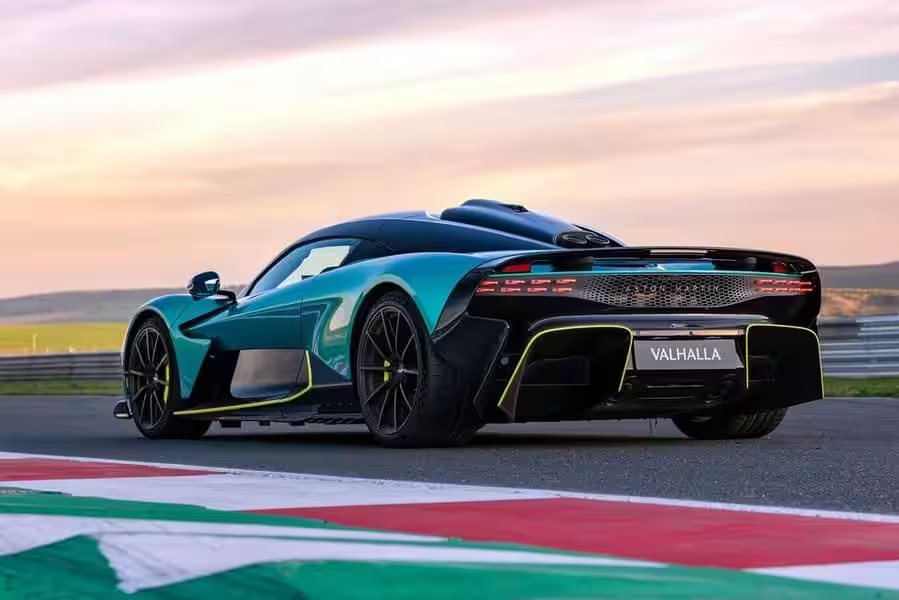
The design leans hard into spectacle: upward-opening doors, top-exit exhausts, and an aerodynamic spoiler inspired by Formula 1. Active aerodynamics generate more than 600 kg of downforce at 240 km/h, while torque vectoring is there to make the whole thing turn with less drama than the powertrain would suggest. In other words, Aston Martin is selling speed, but also a very expensive promise that you’ll be able to use it without immediately regretting your life choices.
That mix of supercar and hypercar is exactly the point. Ferrari, McLaren, and Lamborghini have spent years using low-volume flagships to pull attention – and profit – toward the rest of the range, and Valhalla is Aston Martin’s attempt to do the same with a sharper financial edge. If the 999-car run keeps selling and the customization premium holds, the car could matter more on the balance sheet than in any lap time.
How much Valhalla costs and who can get one
The asking price is $1 million, which places Valhalla firmly in the ”if you have to ask” bracket. With more than half already ordered, the remaining allocation is getting smaller by the minute, and Aston Martin will be hoping the car becomes a symbol of recovery rather than another reminder that glamour is expensive to manufacture.
The bigger question is whether Valhalla is the start of a turnaround or just a very loud stopgap. The car has the numbers, the drama and the scarcity; what it still needs is proof that Aston Martin can turn halo traffic into lasting financial stability.