

NASA’s Orion spacecraft has run into an unexpectedly earthly problem on its way to the Moon: the toilet is out of action. During Artemis II, mission lead Judd Frieling said the waste-water tank attached to the system appears to have iced up, forcing the crew of four to switch temporarily to foldable sanitary devices while engineers try to clear the blockage.
The situation is funny in the way only spaceflight can be: a lunar mission is being slowed down by a frozen bathroom line. It is also a reminder that deep-space hardware still has to survive the least glamorous parts of human travel, not just the spectacular bits that end up on NASA’s social feeds.
What NASA says went wrong on Orion
Frieling said the team tried to clear the waste tank overnight, but ran into trouble because of what they believe is an ice-related blockage. NASA has not said how long the toilet will stay offline, only that the backup setup is being used for now.
That may sound minor, but it sits inside a broader truth about crewed lunar missions: life-support systems are judged as much by plumbing as by propulsion. Space agencies have spent decades hardening spacecraft for everything from power glitches to communication dropouts, and a frozen toilet is exactly the sort of failure that still finds a way to make headlines.
Artemis II has already had a messy start
The toilet issue is not the only wrinkle Orion has faced. Earlier in the mission, the crew dealt with smoke on board, though space historian Alexander Zheleznyakov said it did not pose a threat to the astronauts or the spacecraft and would not have long-term consequences. There was also a temporary loss of communication, another reminder that test flights are designed to expose problems before they happen farther from Earth.
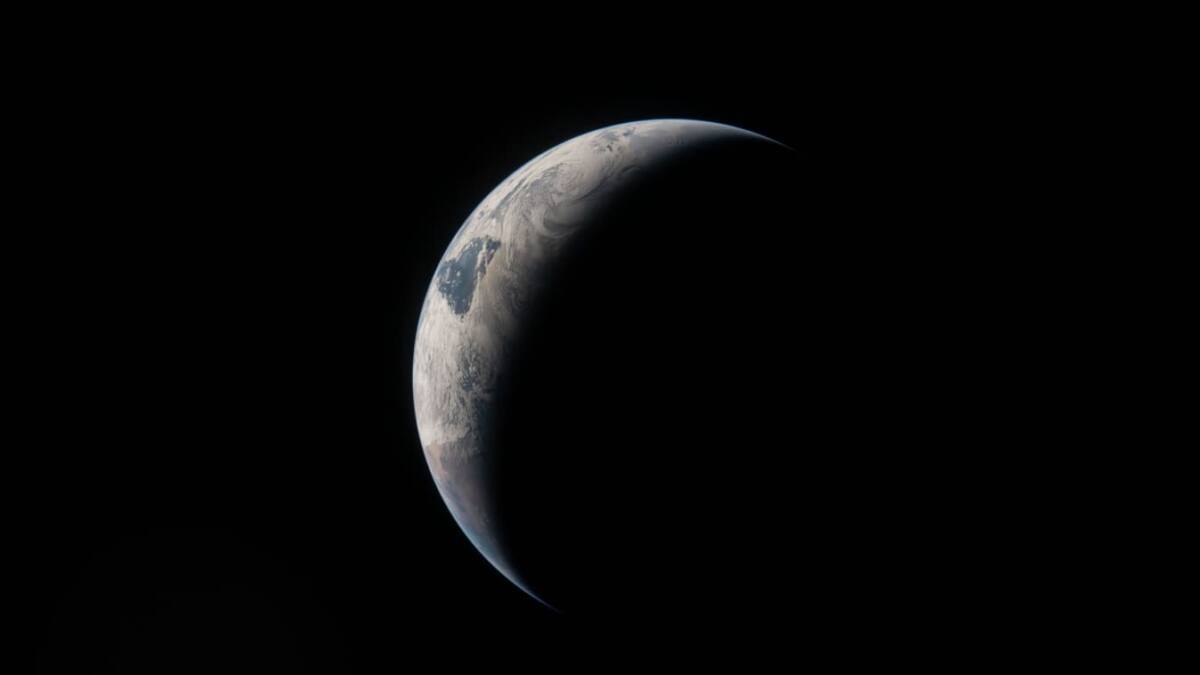
NASA also shared a fresh image from the spacecraft showing Earth partly lit by the Sun, making it look like a young Moon. The agency has spent two days demonstrating a new optical communications system, which could become important for future trips to the Moon and Mars. For all the jokes about a broken toilet, that is the real prize: proving that the next generation of deep-space hardware can handle both the heroic and the annoying.
The crew now has to wait for a fix
For now, the practical question is simple: how quickly can NASA restore the main system without interrupting the rest of the flight plan? Space missions rarely fail in dramatic, cinematic ways; more often they are slowed by small mechanical problems that demand patience, improvisation, and a very high tolerance for inconvenience.