


Russia’s biggest online retailer Wildberries has acquired three taxi services, including Citymobil, signaling an aggressive push into ride-hailing. Meanwhile, the Ministry of Digital Development has cut off mobile billing for Apple’s App Store in Russia, escalating pressure on the tech giant amid ongoing sanctions. On the space front, NASA’s Artemis II mission marked humanity’s first crewed flight around the Moon in over 50 years. Here’s the week’s key tech developments from Russia and beyond.
For a detailed breakdown, listen to the latest episode of the ForGeeks podcast or follow their Telegram channel for real-time updates.
Listen to ForGeeks podcast: Apple Podcasts • VK • Yandex Music • YouTube • Spotify • Telegram • Other platforms
Wildberries expands into ride-hailing with Citymobil acquisition
Wildberries and its logistics arm Russ have acquired three transportation assets from the People&People group, including Citymobil and taxi services Taksochikof and Gruzovichkof. This move is strategic-Wildberries aims to enter the Russian ride-hailing sector. The marketplace operator already launched WB Taxi in Belarus and Uzbekistan last summer, marking a regional push beyond e-commerce.

Citymobil currently holds about 1% of Moscow’s taxi market, down from a peak of 20%. Yandex dominates with over 96%, making Wildberries’ purchase less an attack on the market leader than a shortcut. Acquiring Citymobil enables Wildberries to leverage an existing platform, driver network, and licenses to quickly roll out WB Taxi in Russia without building from scratch.
Russian Ministry of Digital Development blocks mobile billing for Apple App Store
From April 1, subscribers of major Russian mobile operators-MTS, Beeline, T2, and Megafon-can no longer pay for Apple apps and subscriptions using their phone balance. The ministry instructed operators to suspend this payment method on March 28 during a meeting with Minister Maksut Shadaev. Officially, the move is temporary but functions as pressure on Apple: reinstate Russian apps on the App Store or risk losing revenue.

The logic is clear: since 2022, mobile billing became the only working payment method for millions of iPhone users in Russia, with Visa, Mastercard, and Mir cards not supported by Apple. According to RBC, over 80% of purchases in the Russian App Store are for VPN services, which regulators strongly oppose.
Top Russian platforms ordered to block VPN users by April 15
The Ministry of Digital Development convened leaders of over 20 major Russian internet platforms, including Sberbank, Yandex, VK, Wildberries, Ozon, and Avito, instructing them to block users accessing services with VPNs by April 15. Companies received technical guidelines to detect even VPNs not yet identified by Roskomnadzor.
Penalties for non-compliance include losing IT accreditation, removal from Roskomnadzor’s whitelist, and dropping from the list of pre-installed apps on Russian devices. Corporate VPNs are formally exempt, but because it’s currently impossible to reliably distinguish them from personal VPNs, false positives are expected. Operators are also instructed to introduce charges for international data usage above 15 GB per month by May 1. Fines for individual VPN use are under discussion.
Major bank outages push Russians back to cash for hours
On the morning of April 3, payment cards stopped working in stores, terminals froze, and ATMs showed errors as Sberbank, VTB, and T-Bank, along with the Faster Payment System (SBP), simultaneously went down. Complaints about SBP skyrocketed 37 times above the daily norm. This is the second time in a few months the trio of banks experienced a synchronized outage, with a similar incident occurring on December 29, 2025.
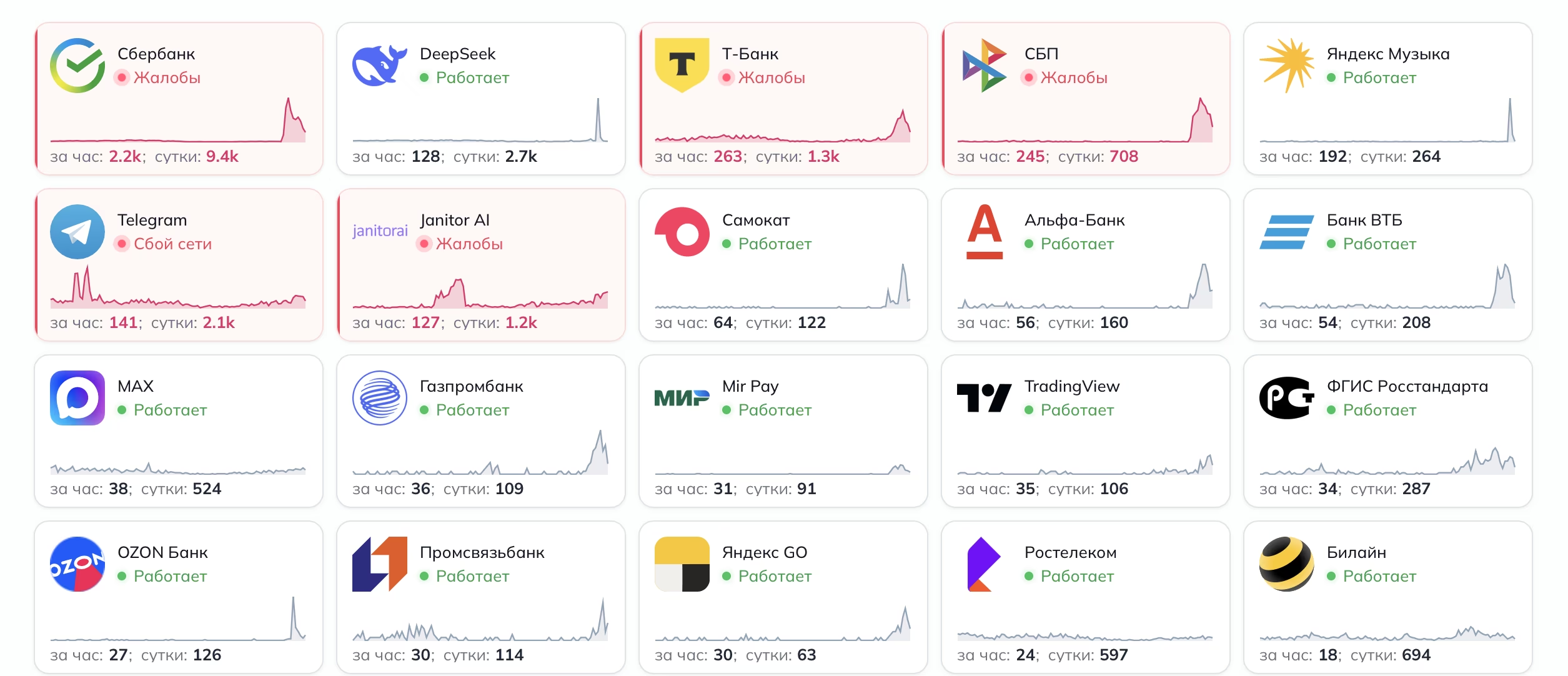
VTB was the only bank to acknowledge the problem and promised automatic refunds for failed transactions. Sberbank and T-Bank claimed normal operations despite thousands of complaints, which did little to assure customers. Reports indicate customer funds were safe-transactions either succeeded or didn’t process at all. Other banks like Alfa Bank, Gazprombank, and Rosselkhozbank operated normally during the disruption.
Google open-sources Gemma 4 AI models supporting video and 140 languages
Google partially open-sourced the technology behind its proprietary Gemini 3 Pro AI with four new models, ranging from 2 billion to 31 billion parameters, designed to run on devices from smartphones to servers. Claiming ”unprecedented intelligence per parameter,” the largest Gemma 4 models ranked #3 and #6 on the Arena AI benchmark, outperforming systems 20 times larger.
All models support video and image understanding plus audio, offer offline code generation, and handle 140 languages. The major change from previous versions is the switch to an Apache 2.0 license, allowing free use, modification, and deployment without Google’s prior approval. The models are available on Hugging Face, Kaggle, and Ollama.
Artemis II launches humanity’s first crewed lunar mission in 50 years
On April 1, NASA launched Artemis II from Kennedy Space Center, sending four astronauts-three from NASA and one from the Canadian Space Agency-on a 10-day lunar flyby aboard the Orion spacecraft. This mission marks humanity’s return to deep space since the Apollo program.
Hours after liftoff, Orion successfully detached from the Space Launch System rocket. Astronaut Victor Glover took manual control to test the spacecraft’s maneuverability. Unexpectedly, the crew reported an issue with the onboard toilet-the first fully functional one designed for extended missions in space. As a backup, they resorted to Apollo-era waste bags. Splashdown in the Pacific Ocean is expected on April 10.
Anthropic’s Claude Code leak sparks DMCA takedown on GitHub
A fragment of Anthropic’s agent tool Claude Code source leaked on GitHub, quickly gaining millions of views and numerous forks before legal teams issued a DMCA takedown. The irony is palpable: Anthropic, facing lawsuits for training AI on copyrighted material without permission, is now aggressively protecting its own intellectual property.
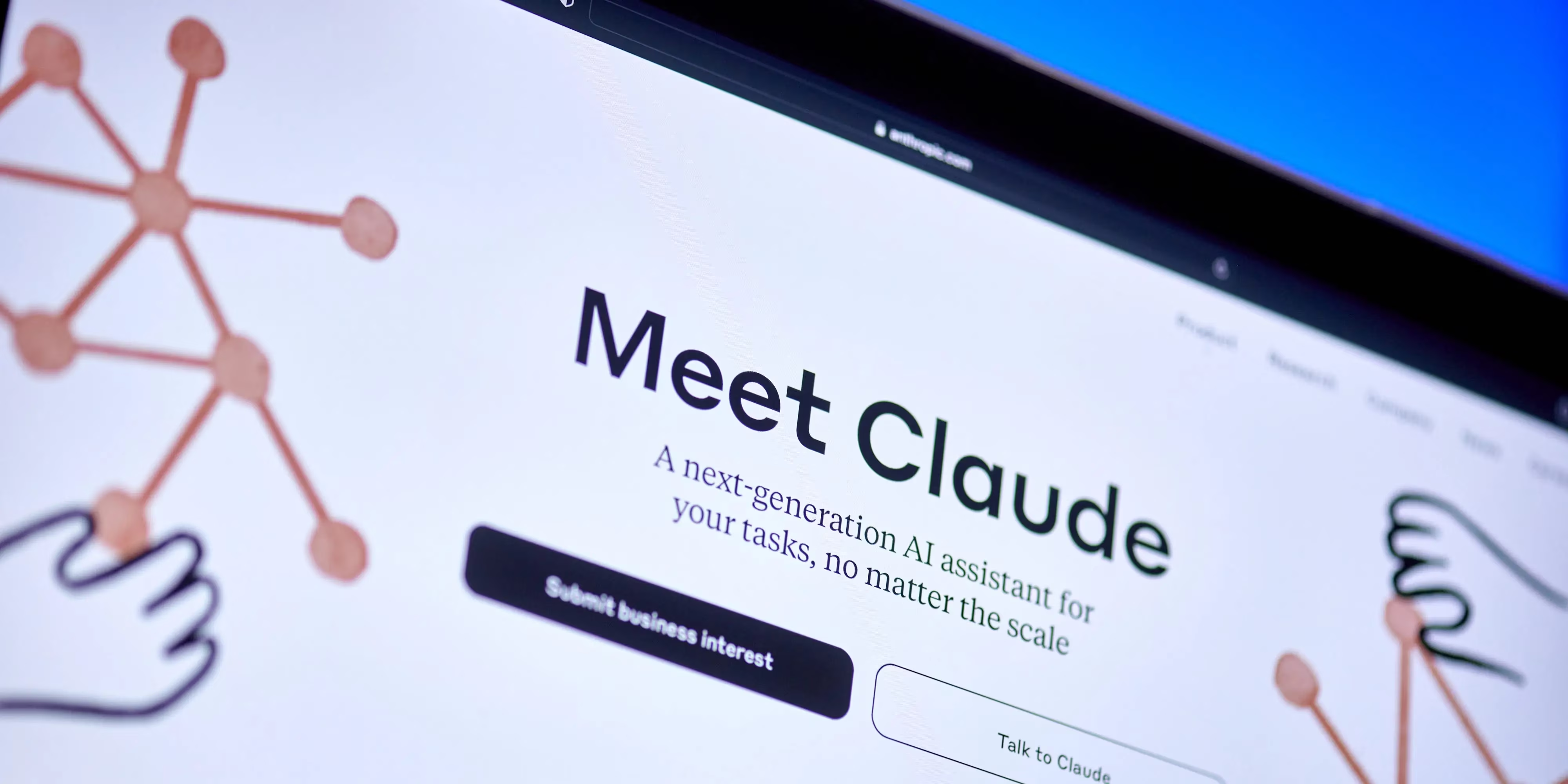
Experts say the leaked code was not the AI agent’s core logic but the software layer linking it to external context-still, this is a setback in the AI agent race, exposing engineering approaches usually shielded behind marketing. Anthropic has already paid $1.5 billion in copyright claims this year, making the DMCA action a fitting chapter in a turbulent legal saga.
Google allows Gmail users in the US to change their email address
After two decades of permanent email handles, Google is finally letting US Gmail users change their address without losing messages. Both old and new addresses deliver mail to the same inbox, so users won’t need to update logins across services.

However, there are catches: the feature is currently limited to the US, and after changing your address, a 12-month cooldown applies before it can be changed again. So users should choose their new email carefully-no room for typos or regrets.
Telegram advises Russian users to prepay Premium subscriptions amid service instability
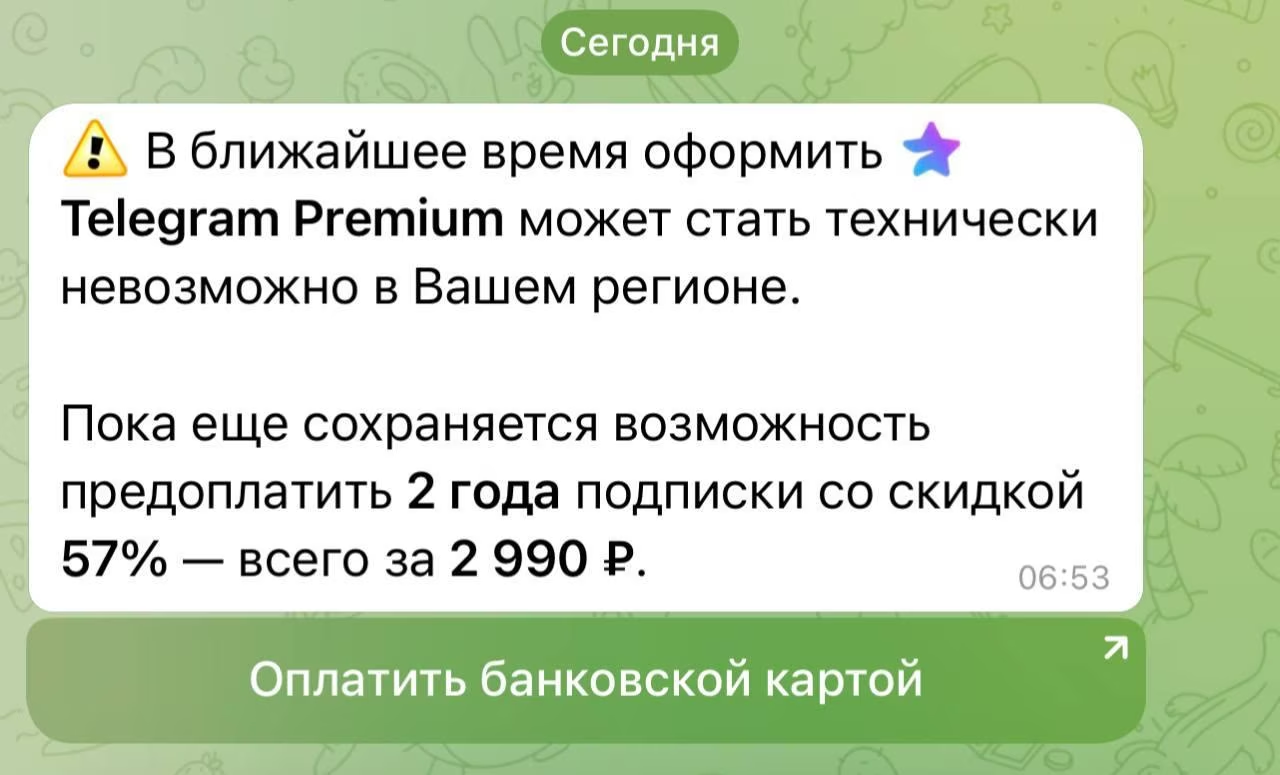
Facing slowdowns and frequent glitches since March, Telegram has started notifying users in Russia to prepay for one- or two-year Premium subscriptions while the option remains available. The official bot and app menus warn this may be the last chance to buy Premium, hinting at looming service disruptions or even a block.
February’s slowdown affected media content and app stability. On March 16, Telegram received over 8,000 daily complaints. The risk of a complete ban persists, so encouraging users to buy subscriptions in advance makes strategic sense.
Denuvo DRM cracked with hypervisor method enabling day-one piracy
A new hypervisor-based bypass has broken Denuvo, the long-standing benchmark in anti-piracy protection. Repacks of games are now appearing simultaneously with official releases. Meanwhile, developer Irdeto promises countermeasures that won’t hurt performance-critical since pirated versions historically ran better than protected originals.
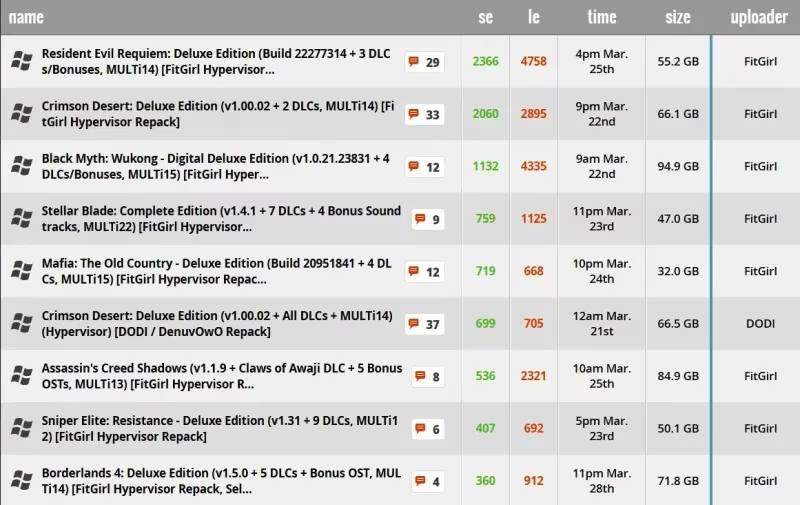
The trade-off is steep: the hypervisor hack requires disabling almost all of Windows’ security features-Virtualization-based Security (VBS), Credential Guard, driver signature enforcement, and memory integrity-exposing systems to malware with privileges beyond the OS level. Even piracy groups warn users of the risks and recommend re-enabling protections after gaming sessions, a process inconvenient for most.
If you’re on YouTube, you can also catch the ForGeeks podcast episode below.
Russia’s tech scene is grappling with tightening regulations while local giants expand into new sectors and international players navigate shifting restrictions and legal battles. With government pressure on VPNs intensifying, mobile payments restricted, and major platforms consolidating, expect further disruptions in how Russian consumers access digital services and goods. The Artemis II mission reminds us that human ambition pushes beyond borders, even as technology industries face trials on the ground.