

On March 4, a small but meaningful move in Moscow matters to anyone watching the global tech talent pipeline: IKS Holding is opening the Cryptography Museum free to engineers, engineering students and their families. Initiatives like this are where the abstract world of encryption collides with recruitment, education and public tech literacy. For international readers, it signals a local effort to make STEM careers visible-especially in a country where state, university and industry pathways still determine who gains advanced technical training. Exhibits that trace cipher machines to modern messenger encryption turn specialized history into accessible curiosity and career inspiration. That outreach feeds the global ecosystem of software, security and satellite engineering by widening the pool of motivated, technically literate recruits. A free-admission day is not just a museum visit; it’s a practical nudge toward building the next generation of engineers the tech world needs who will tackle future global challenges.
IKS Holding announced free entry to the Cryptography Museum in Moscow for engineers, students in technical fields and their families on March 4. The move coincides with World Engineering Day and aims to showcase the engineering ideas behind modern tools for protecting information and communications.
What the cryptography museum will show and who can get in
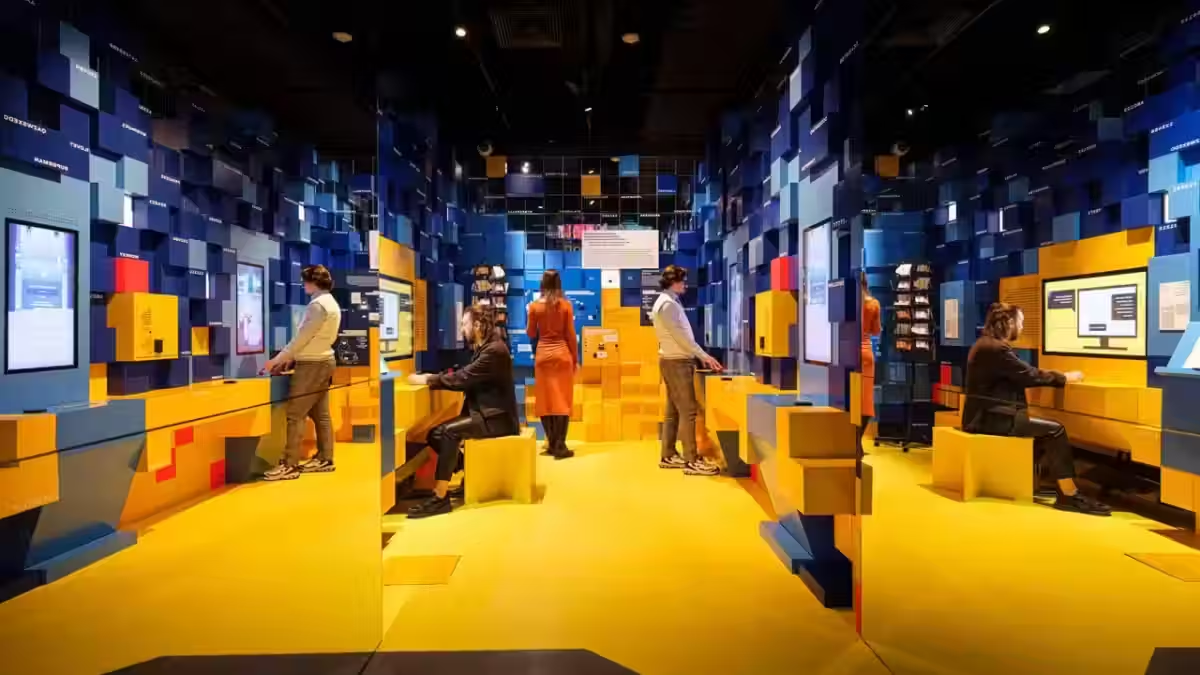
The exhibition traces the evolution of cryptography – from methods used to conceal diplomatic and military messages to the digital encryption that underpins modern messengers. The museum displays a unique collection of cipher equipment and features interactive zones that let visitors see complex data-protection processes in action.
To get a free ticket on March 4, engineers and students need to present a diploma or a student ID in an engineering specialty. Along with them, one adult and two children will also receive free admission.
IKS Holding and support for engineering education
IKS Holding says it actively develops projects to popularize engineering and pass knowledge on to new generations. The company frames engineering as a shaper of the country’s future across areas from security to satellite communications, and positions the Cryptography Museum as a platform designed to inspire young people to choose technical careers rather than just a place with exhibits.
”Engineers today don’t just create technologies – they shape the image of the future. In our museum you can see how bold ideas of different eras were turned into real tools that change the world,”
Alexey Shelobkov, general director of IKS Holding
Lidiya Lobanova, the museum’s director, adds that the interactive format helps schoolchildren and students find their path into new professions and become authors of change.
When and where to visit the museum for free
The promotion runs on March 4 from 11:00 to 20:00 at: Moscow, Botanicheskaya Street, house 25, building 4. It’s an opportunity not only to dive into the history of encryption but also to introduce children to engineering – still one of the most in-demand professions that shapes modern life.
Context for readers outside Russia: World Engineering Day (observed on March 4) has been used locally as a moment to highlight technical professions. In Russia, engineering retains a strong cultural and institutional footprint dating back to the Soviet era, with close links between technical universities, research institutions and industry. Events like a free museum day are part of a broader push to keep that pipeline active at a time when global tech competition increasingly depends on recruiting and educating capable engineers.
Analysis: The museum’s free-admission day is a low-cost, high-visibility way to connect public curiosity to technical careers. For IKS Holding, it’s both civic outreach and talent cultivation – showing how historical artifacts map onto contemporary problems like secure messaging and satellite links. The format works: hands-on exhibits demystify abstract concepts and make them tangible for younger visitors who might otherwise never consider cryptography or systems engineering. Still, one-off initiatives are only a piece of the pipeline. Sustained partnerships with schools, internships and scholarships are needed to turn museum interest into long-term career paths. On the international stage, small efforts like this matter because they help replenish a global pool of engineers focused on software, security and infrastructure – skills that no single country or company can take for granted.