

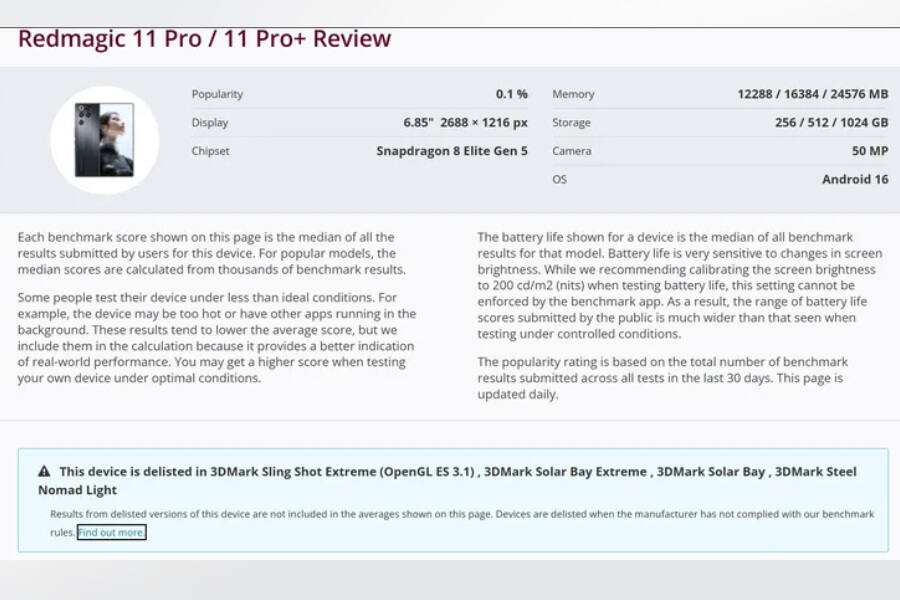
3DMark has removed the RedMagic 11 Pro and RedMagic 11 Pro+ from its database after deciding the phones behaved differently under benchmark tests than they do in normal use. The dispute is a familiar one in Android performance circles: if a handset only unleashes its full power for the scoring app, is that a test result or a sales pitch with numbers attached?
The benchmark platform says the phones lifted usual limits on power and temperature during its tests, letting the chipset run harder without throttling. That can produce eye-catching scores, but it also makes comparisons messy, because the result no longer reflects everyday gaming, app launches, or the kind of sustained load most buyers actually experience.
Why 3DMark removed the RedMagic 11 Pro scores
3DMark’s rules are built around one simple idea: benchmark scores should represent normal behavior, not a special mode triggered by the test itself. According to the platform, the RedMagic 11 Pro models crossed that line, so the results were classified as a violation and taken down. That sort of enforcement matters because benchmark charts only work if the underlying rules are boring and consistent.
This is not a new problem. Phone makers have spent years tuning software to look better in synthetic tests, and benchmarking firms have spent just as long trying to keep pace. The RedMagic case is just the latest reminder that raw scores still need asterisks, especially in a market where gaming phones sell on bragging rights as much as on actual battery life or thermals.
Nubia says the phones are built for heavy workloads
Nubia, the company behind the RedMagic line, defended the devices by arguing that they are designed for high-performance gaming and include multiple modes users can enable. It also pointed to ”Diablo Mode,” which is meant to push the hardware as far as it can go under demanding loads. That is sensible branding for a gaming phone, but it does not automatically make benchmark-specific behavior fair game.

The company also argued that benchmarking should be seen as a measure of performance potential under controlled, high-load conditions, and that results can change depending on system settings and usage. Fair enough, up to a point. The catch is that benchmark databases are not built to reward hidden overdrive modes; they exist so buyers can compare phones on something closer to a level field.
What this means for gaming phones
For gaming-first devices, this kind of controversy is especially awkward because their whole pitch is about squeezing every last drop of performance out of the silicon. But if that extra burst only appears when a benchmark is watching, reviewers and buyers will keep asking the same question: performance for whom, and for how long?
- Removed devices: RedMagic 11 Pro and RedMagic 11 Pro+
- Reason cited: the phones are said to disable normal power and thermal limits during benchmark tests
- 3DMark position: scores should reflect typical real-world use, not a special testing mode
The likely result is more scrutiny, not less. Gaming phone brands will keep chasing headline-grabbing scores, and benchmarking companies will keep tightening the rules. The only open question is how many more devices get caught before the industry finally decides that ”performance potential” and ”benchmark cheating” are not the same thing.